


A Brief Encounter with Robert Redford
Yes, I do have a Robert Redford story.
When I was working at MLB, Major League Baseball, in the late '70s, the office was at 75 Rockefeller Plaza—the Warner Communication building, near the skating rink.
One fine day I got in the elevator to go to (I think) the 10th floor, and who gets in the elevator—alone with just me—Redford. So, I have about 15 seconds to say SOMETHING, ANYTHING . . . and I nod and say "Hello, Mr. Redford . . . . did you know that the Major League Baseball offices are in this building? That's where I work."
And HE says, "I played baseball at the University of Colorado . . . . and I have an office here."
There was one other thing I had to say to him. "Mr. Redford, we have a secretary here with a floor- to-ceiling poster of you in her office. Any way you could pause and come with me to surprise her and shock her?" . . .
(Image by ChatGPT)

you don’t have to say something . . .
. . .about every terrible thing
Nearly every politics-adjacent Substack I subscribe to has had some extended comment on Charlie Kirk’s assassination, as have the podcasts I listen to, and so forth. But I have to be honest: the batting average for these stories has not been super high. In some instances, they’ve left me with a lower opinion of the author than I came in with. Many are just a little too self-conscious about defining the author's place in the moral and political pecking order, at triangulating precisely whose side one is on. . . .
True, not covering a story is sometimes a sign that you think it deserves less attention. But there are other valid reasons for restraint, most importantly that you’re still processing the news or that you don’t have much to add at the moment beyond saying that what happened was terrible. Part of the value in not immediately commenting on every story is that you don’t establish a precedent where it becomes conspicuous when you sit one out. . . .
(This is an excerpt from Nate Silver’s Substack. We recommend that you read the whole piece.)

The Museum of Obsolete Technology
We have a record player, an actual turntable that plays actual vinyl albums. We have lots of actual vinyl albums. We even have a number of 45s, although I’m not sure I could find the spindle that would allow us to play them on our actual turntable.
We also have two or three Walkmen, although I’m not sure any of them still works or walks. In my desk are three different tape recorders, including one that only uses micro cassettes. The other two use regular-size cassettes, and we have lots of that size, and a number of the micro cassettes as well. . . .
Why? Well, first, of course, my wife and I have difficulty getting rid of anything. We have too many books, an abundance of flower vases, a plethora of coffee mugs. Over time, we have been fortunate enough to accumulate lots of stuff and we are reluctant to disembarrass ourselves of much of it.
But I think it’s more complicated than that.
It’s complicated because, over the last few decades, there simply has been so much new tech. . . .

Physics and the Aging Brain
Age of course imposes a number of penalties upon us: We lose muscle tone. Our reflexes slow. We require reading glasses. Our hair thins. We lose an appreciation for the profundity of rock lyrics. The question -- a crucial question for those of us who value our wit as much as our abs -- is whether a decline in intelligence belongs on this dispiriting list.
The best evidence that it does has always been the effect aging has upon those who depend most on high-intensity mental gymnastics: chess masters, for example, or lyric poets, or inventors, or mathematicians, or, to choose the classic example, physicists. . . .

iced
An excerpt from the Doomsday Scenario newsletter by historian Garrett M. Graff.
The most worrisome aspect of the quick militarization and turbo-charging of ICE is how American law enforcement across the board — and much of the government beyond — is being subsumed by ICE’s mission and lowering themselves, from hiring to behavior to tactics, down to ICE’s standards.
We have different federal law enforcement agencies for a reason, and moreover, as citizens, we as a country need and want federal law enforcement. The FBI, DEA, ATF, Secret Service and the U.S. Marshals all have their own lanes, authorities and responsibilities, but right now we’ve watching the Trump administration turn all of federal law enforcement across both the Justice Department and Department of Homeland Security into a faceless quasi-ICE auxiliary, blending all these agencies and agent into some amorphous anonymous blob of masked, brown tactical-vest-wearing federal law enforcement. I wrote recently about how this precisely is what authoritarian regime looks like — armed, masked, anonymous agents of the state jumping from unmarked vehicles and whisking people away. . . .

where did i leave that?
My phone is missing.
I’m in the car, getting ready to meet someone for lunch and do some errands, and I had had the phone, just a moment ago, and now I can’t find it. It was right there in my right-side front pocket, where it always is, and now it’s gone. And I have no idea where it’s gone to.
I get out of the car, go back in the house, and go into the kitchen, where I had just been before getting out of the house and into the car. The phone isn’t there. I go upstairs to the bedroom, where I had been before I had been in the kitchen, and the phone isn’t there either.
It isn’t anywhere.
I’m getting late for my lunch so I give up, for the moment, really frustrated, and get back in the car. The phone, of course, is there, on the seat, where I have absolutely no memory of having placed it.
It’s not the first time something like that has happened to me. And I’m sure it won’t be the last.
Of all the annoying but probably inconsequential memory issues that come with aging—not being able to think of the name of that movie we just saw or that book we just read or can’t quite be able to come up with the precise word we are searching for—losing things might be the most exasperating. . . .

AI is the world’s future; it isn’t mine
I haven’t used ChatGPT. Nor do I plan on it.
At 76, I have a hard enough time printing pictures from my phone or sending contact information to somebody else. But my reasoning goes beyond my aversion to technology. It relates to some degree to Mitch Stephens’ essay on this site, ”So You Think You’ve Seen AI?”
He in essence warns those who’ve fully embraced AI that technology takes a long time to evolve, so we don’t really know what we’re in love with yet. “Most of us in the early years—the early decades—on the internet did not have a clue what the internet would be.”
Now we know better that some aspects of the internet are good, as I wrote a week or two ago, noting that Facebook has helped me find long-lost friends. Other aspects of the internet are awful, such as the bullying and trolling that goes on hourly on social media, the state of electronic bombardment we live under daily, and our obsession with and addiction to our phones.
Now AI is everywhere. These days, I can’t start a Google search without first getting pasted with AI information about whatever I’m looking up. I’ve learned quickly that sometimes that information is wrong—really wrong. Let me give you one example from a couple of weeks ago. . . . .
[Illustration is, of course, created by AI]

Whatever Ezra writes
. . . . This past weekend Ezra Klein helped lug another awkward idea into the Overton Window. He called on Democrats to borrow a trick from Republicans and refuse to do what is necessary to fund Trump’s government. Mon Dieu! Democrats are supposed to be the reasonable ones. Shutting down the government is for the crazies. . . .
I don’t want to exaggerate the power a journalist can wield. And Ezra Klein was not the only one calling for Democrats to allow the government to shut down.
But maybe Ezra has sensed that Democrats are tired of playing nice.
And Ezra Klein may currently matter more than any other journalist on the center-left. . . .

The Napping Age
Many years ago, the man in his mid-50s my wife used to work for would close his office door sometime in the afternoon, lay down on the floor and take a 20-minute power nap. Afterwards, he was full of energy.
I thought, frankly, it was just a bit nuts. Well, the laying down on the floor part, sure. But I really meant the whole idea of napping. Why waste time in the middle of the day? Sleep at night, do stuff when it’s daytime!
I have now changed my mind, mainly because I am at the napping age.
And, I know, I am not alone.
According to research, up to 60 percent of adults aged 65 and older regularly take daytime naps . . . .

So, You Think You’ve Seen AI
Suddenly I’m hearing it even from my sometimes tech-challenged buddies:
“I really like AI,” says a fellow septuagenarian.
“I use it all the time to look up all sorts of things,” announces another. “I love it!”
A sexagenarian—who still has, of all things, a job—gushes: “AI is the best thing that has happened to the internet.” . . .
Don’t get me wrong. I’m no tech wiz myself at this point. And I’m proud of my fellow oldsters. They are staying up to date. They can handle a new technology. . .
However, it is also the case that my alert, tech-savvy oldster friends, gushing about the capabilities of GPT 4 or 5—and plenty of alert tech-savvy, similarly gushing young’uns—have little sense of how sweeping the transformations unleashed by artificial intelligence might be. . .
For the point of artificial intelligence is not just supposed to be doing what humans do only quicker and better. The point of artificial intelligence is supposed to be to think new thoughts, to conjure up new things: new cures for diseases, new inventions, new ways of organizing societies, new opportunities for humanity . . .

My Favorite Cover Versions
Let’s accept the Wikipedia definition of a cover song as “a new performance or recording by a musician other than the original performer or composer of the song.”
We might all agree that in our generation the worst covers of pop music hits were by Pat Boone, the insipid vocalist from the 1950s and ‘60s who first made his reputation by blandly singing songs by immortal R&B stars like Little Richard’s “Tutti Frutti” and Fats Domino’s “Ain’t That A Shame.”
Here instead are my dozen favorite cover songs in the post-1950 period (see note below for the ground rules guiding my choices). I encourage readers to send in their own favorites:
The Beatles and “Twist and Shout”: Written in 1961 by Phil Medley and Bert Berns and first recorded by the Top Notes, this terrific dance tune became a strong hit for the Isley Brothers in 1962. But the Beatles’ slightly faster version, included on the Fab Four’s first British album in 1963, featured exuberant musicianship and an incredibly passionate, raspy vocal by John Lennon that brought it to the level of greatness. . . .

money and subservience
Think of all Trump’s moves—whether controlling the Fed, or occupying American cities, or unleashing ICE on immigrants, or imposing import taxes (tariffs) on American consumers, or attacking American universities and museums, or shaking down CEOs, or punishing his “enemies”—as motivated by an unquenchable thirst to accumulate bargaining power over every other actor and institution in the world.
The more bargaining power he has, the more he can extort from them the things he most cares about: money and subservience.
We are dealing with a sociopath who is continuously seeking new ways to force others to reward him with personal wealth and total domination.
Money is not enough. He relishes the submission of others. . . .
(An excerpt from Robert Reich’s Substack)

In Praise of Bobby Richardson
Bobby Richardson, the New York Yankees all-star second baseman of the 1960s and a perennial World Series hero, turned 90 on Aug. 19.
I had become a fan club member of his when I was 11, and when I joined the Yankees public relations staff in 1968 (he was two years retired by then), we reconnected and have remained adult friends all these years.
He has long invited me to visit him in Sumter, South Carolina, but I never did. Then a few months ago I had a “what am I waiting for?” moment and decided to go there from New York for the milestone birthday. . . .

Dispatch from Occupied DC
I’ve lived here long enough to remember when Washington, DC often was described as a sleepy southern town. Now it’s starting to resemble a banana republic capital after a military coup.
Armed masked thugs working for ICE (Immigration and Customs Enforcement) are arresting mostly black and brown people with impunity on city streets in broad daylight. Screw reading your rights, fuck due process. It’s a disgusting show of political theater that is supposed to combat what our pustule of a president calls the unfettered crime wave in the “hellhole” nation’s capital.
In addition, Trump has taken over the DC police force (we’re the federal city, remember) and ordered in National Guard troops to protect us all from rampaging mobs of undocumented criminal Latinos and bloodthirsty homegrown Blacks. (Never mind that before all this, overall crime in DC was the lowest it had been in decades.)
Mind, the political theater is playing only in selected locations. .
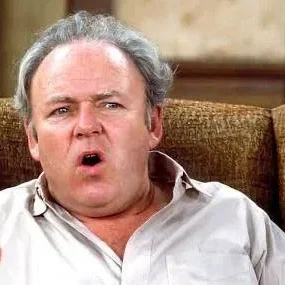
when reality outstrips entertainment
Can you imagine a television series like “All in the Family” today?
Archie Bunker, of course, was a bigoted, loudmouthed, no-nothing bully and braggart from Queens who got his comeuppance at the end of every half hour. Today, Archie Bunker is president of the United States. And so far, there is no comeuppance.
(And, for that matter, Melania is no Edith. But Jared Kushner, actually, could very well be Meathead.)
Can you imagine a television series today like “The West Wing”?
Only 20 or so years ago, “The West Wing” focused on the kind, judicious, deeply religious intellectual who was president of the United States and his committed, dedicated staff who carefully weighed each decision as they engaged in pithy conversation while walking the bustling halls of the White House. They were practical but idealistic, devoted but straightforward.
None of them was a virulently racist deputy chief of staff with dead eyes and an angry snarl. . . .

A Gun Again
. . . .The death toll could have been far worse. The door to the church was locked, forcing the shooter to attack from the outside. That detail was treated as an unequivocal positive—and thank goodness the door was locked that morning. But the door to a church being locked during services by default is also a dystopian canary in the American coal mine. Rather than dealing with the root problem, the United States has made political choices to live this way, where the only way to try to keep kids safe is to lock the world out. . . .
Deranged zealots, bigots, evil, hateful murderers, and mentally unwell people exist everywhere on the planet. There are people like the Minneapolis shooter in every country in the world. But routine mass shootings occur with regularity in just one developed rich country. Why is that?
There was something in the shooter’s video that offered a far better explanation than any incoherent manifesto ever could: a bewildering array of guns and an enormous cache of ammunition, all legally purchased. . . .
(This is an excerpt from a larger analysis on Brian Klaas’ Substack.)

Highway 61 Revisited Revisited
Bob Dylan’s sixth studio album—his burst into full-on rock ‘n’ roll and thinking that he got it made—was released sixty years ago Saturday. That album, Highway 61 Revisited—is a strong candidate for best album of all time.
. . . Highway 61 Revisited now is a relic of a once upon a time when we dressed, if not so fine, at least so hip. It is, therefore, a reminder of how old and sedentary and stodgily dressed we now must be—of how much moss we have gathered, of how we no longer laugh about much we used to laugh about.
Dylan was 24 when he recorded it. He is 84 now.
And most of us now (current presidents excepted) don’t talk so loud. We leave restaurants nowadays if the music is playing too loud. And most of us now indeed don’t seem so proud (especially about the current state of our country).
And something, no doubt, is happening here—in these AI-but-anti-science, globalized-but-tariffied, happily diverse-but-terrifyingly-anti-diversity, law-and-order-but-masked-thugs-on-the-streets times. And we don’t know quite what it is. But it has taken our voice and left us howling at the moon. . . .
(Image created by ChatGPT — Includes recent videos of Dylan singing “Highway 61” and “Desolation Row”)

Life lessons
This story started out as my list of life’s lessons. I soon realized that as I get older and increasingly appreciate how precious life is—and how fragile we all are—these lessons really boil down to just these two:
Lesson Number one:
Never put off letting someone know you care
I’ve always been a procrastinator, and the effect of dragging your feet on most things is often inconsequential. However, when those “things” entail doing something for someone you care about—or letting them know you care—putting it off can have a lasting impact. You might well regret it for the rest of your life. I do.
The first time it happened for me was when someone I knew and admired died of breast cancer. I hadn’t seen her in about a year and recalled that she’d told me of the diagnosis when I ran into her. I didn’t follow up for a long time.
I was so ashamed. . . .

The Outlook in Montana
There’s a reason Montana is called Big Sky Country. The horizon stretches endlessly. During short summer nights, stars sparkle in dark skies. On brilliant summer days, blue meets green in the distance. Images of mountains and trees shimmer in pristine lakes and ponds.
Fifty-five summers ago, in 1970, I split my work week between night and day shifts as the fill-in guy for the night watchman, desk clerks and bell hops at Many Glacier Hotel in Glacier National Park near the Canadian border.
On days off, my then girlfriend, now wife, Kathy, and friends and I would hike on mountain trails, passing hardly anyone. We’d occasionally bang pots and pans to scare off any nearby bear.
I didn’t much like my night watchman shift because I’d wander alone through the cabins and parking lots of the lodge property with nothing but a flashlight for protection. After day shifts, I sometimes sang for tourists in the hotel lounge, and some nights a group of us would stuff into cars to drive 10 miles or so to the nearest watering hole outside the park.
Back then both of Montana’s U.S. senators were Democrats. . . .

retirement and Enlightenment?
I read the article, “The Red Queen Fallacy,” from which what follows is taken, on Brian Klaas’ very interesting Substack. In it he argues that people nowadays are too damn busy:
Too busy listening to Lewis Carroll’s Red Queen crying “Faster! Faster!”
Too busy in particular to experience what Klaas quotes Hannah Arendt as calling the “vita contemplativa,” a contemplative life.
And that raised for me a question—about us, in particular about retired us:
Has retirement and escape from the hustle and bustle gifted us older folks with the opportunity to achieve that “vita contemplativa”? In other words, have we—ex-hippies or never hippies—finally gained or regained the ability to chill or groove or muse or ponder or contemplate or meditate or, even, transcend?
In other words, is there a kind of enlightenment available in retirement? Or do obligations, destinations, family concerns and assorted projects—old or new—continue to intrude?
We would very much appreciate hearing your answer—in comments below or in short essays of your own for this site on whether retirement has or has not led you to a more contemplative life (send to WritingAboutOurGeneration@gmail.com). . . .