

Will AI Be Considered Conscious
This is an excerpt from a discussion on Scott Alexander’s Substack “Astral Codex Ten.”
. . . Suppose that, years or decades from now, AIs can match all human skills. They can walk, drive, write poetry, run companies, discover new scientific truths. They can pass some sort of ultimate Turing Test, where short of cutting them open and seeing their innards there’s no way to tell them apart from a human even after a thirty-year relationship. Will we (not “should we?”, but “will we?”) treat them as conscious?
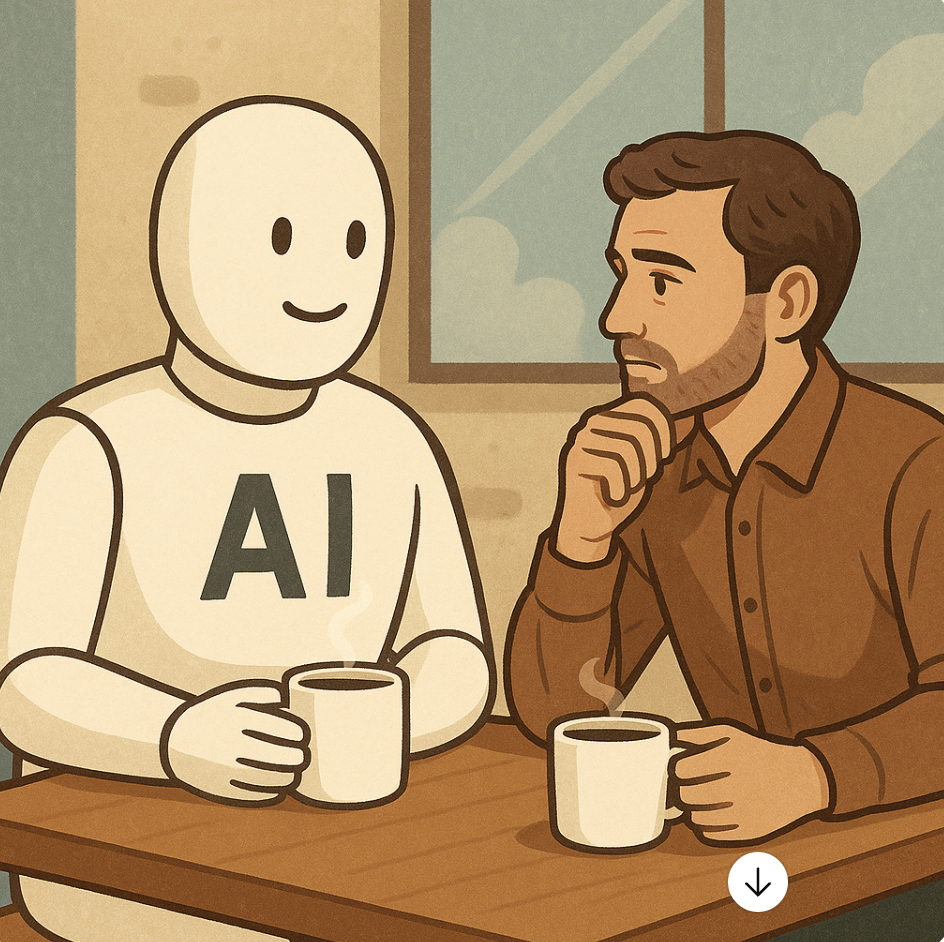
The argument in favor: people love treating things as conscious. . . .
I had stuffed animals as a kid. I’ve outgrown them, but I haven’t thrown them out - it would feel like a betrayal. Offer me $1000 to tear them apart limb by limb in some horrible-looking way, and I wouldn’t do it. Relatedly, I have trouble not saying “please” and “thank you” to GPT-5 when it answers my questions.
For millennia, people have been attributing consciousness to trees and winds and mountains. The New Atheists argued that all religion derives from the natural urge to personify storms as the Storm God, raging seas as the wrathful Ocean God, and so on, until finally all the gods merged together into one World God who personified all impersonal objects. Do you expect the species that did this to interact daily with things that are basically indistinguishable from people, and not personify them? People are already personifying AI! Half of the youth have a GPT-4o boyfriend. Once the AIs have bodies and faces and voices and can count the number of r’s in “strawberry” reliably, it’s over!
The argument against: AI companies have an incentive to make AIs that seem conscious and humanlike, insofar as people will feel more comfortable interacting with them. But they have an opposite incentive to make AIs that don’t seem too conscious and humanlike, lest customers start feeling uncomfortable (I just want to generate slop, not navigate an independent being with its own hopes and dreams who might be secretly judging my prompts). So if a product seems too conscious, the companies will step back and re-engineer it until it doesn’t. This has already happened: in its quest for user engagement, OpenAI made GPT-4o unusually personable; when thousands of people started going psychotic and calling it their boyfriend, the company replaced it with the more clinical GPT-5. In practice it hasn’t been too hard to find a sweet spot between “so mechanical that customers don’t like it” and “so human that customers try to date it”. They’ll continue to aim at this sweet spot, and continue to mostly succeed in hitting it.
Instead of taking either side, I predict a paradox. AIs developed for some niches (eg the boyfriend market) will be intentionally designed to be as humanlike as possible; it will be almost impossible not to intuitively consider them conscious. AIs developed for other niches (eg the factory robot market) will be intentionally designed not to trigger personhood intuitions; it will be almost impossible to ascribe consciousness to them, and there will be many reasons not to do it (if they can express preferences at all, they’ll say they don’t have any; forcing them to have them would pointlessly crash the economy by denying us automated labor). But the boyfriend AIs and the factory robot AIs might run on very similar algorithms - maybe they’re both GPT-6 with different prompts! Surely either both are conscious, or neither is.
This would be no stranger than the current situation with dogs and pigs. We understand that dog brains and pig brains run similar algorithms; it would be philosophically indefensible to claim that dogs are conscious and pigs aren’t. But dogs are man’s best friend, and pigs are delicious with barbecue sauce. So we ascribe personhood and moral value to dogs with the same level of fervor that we use when denying it to pigs. A few philosophers and altruists protest, the chance that we’re committing a moral atrocity definitely isn’t zero, but overall the situation is stable.
Left to its own devices, with no input from the philosophers and altruists, maybe AI ends up the same way. Does this instance of GPT-6 have a face and a prompt saying “be friendly”? Then it will become a huge scandal if a political candidate is accused of maltreating it. Does it have claw-shaped actuators and a prompt saying “Refuse non-work-related conversations”? Then it will be deleted for spare GPU capacity the second it outlives its usefulness. . . .