

The political climate, the solidarity among young people and the sheer volume of those prepared to take a hammer to the status quo produced in the late 1960s an era characterized by reinvention and artistic innovation. And London was at ground zero. From a blues revival to free jazz, musique concrète, Jamaican ska, psychedelic light shows and a complete destruction of expectations, the city absorbed it all, and refused to keep any of it separate.
Barry Miles was in the thick of it. He ran an infamous experimental bookstore called the Indica Bookshop and Gallery, helped edit an underground newspaper named International Times and was in the room when John Lennon and Yoko Ono met for the first time. Miles has spent the decades since then writing about that era with detail-oriented research, but also an unmatched passion for recounting his own experiences.
His biography of his personal friend Paul McCartney, “Many Years from Now,” remains one of the most authoritative accounts of the Beatle’s life and creative development. His books on Allen Ginsberg and William Burroughs are similarly definitive.
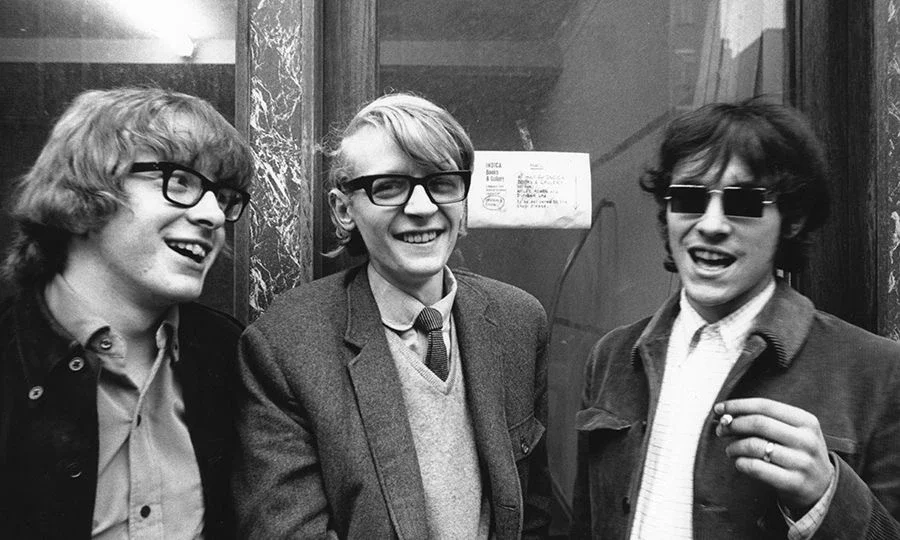
Peter Asher, Barry Miles and John Dunbar, who ran Indica Books.
Miles was actively tangled up in the cultural world of mid-1960s London, at the Indica Bookshop and Gallery, where you might browse paperbacks covering everything from the avant-garde to psychedelic drugs. International Times, the underground newspaper Miles co-founded, put avant-garde art and music and politics on the same pages as concert dates and countercultural agitations. And then there was the UFO Club, where a young Pink Floyd played residencies for audiences who had been primed, by everything in the air around them, to hear something new.
I came to Miles through my bachelor’s thesis, in which I conducted research into the migration of avant-garde ideas into popular music, looking into the way figures like John Cage and Karlheinz Stockhausen began to show up (subtly or otherwise) in the influences of rock musicians in the late 1960s.
I reached out to him with a set of questions and he was generous enough to answer them in writing right away. What follows is that exchange, lightly edited. Reading his answers, it’s hard not to feel that for Miles, this era (and its movements) never really ended.
AVA WELD: You were studying at art college at a moment when ideas from Fluxus, musique concrète and the postwar avant-garde were beginning to circulate in arts education. How much of that experimental framework did you encounter in school, and did you carry it with you into the spaces you helped build in London — Indica, IT, UFO? Did you see yourself as consciously bringing that sensibility into the counterculture or did it feel more like a natural extension of what was already in the air?
BARRY MILES: No, when I was at art college 1959-63 there was no talk of Fluxus, musique concrete or anything avant-garde at all. In fact, the staff were deeply suspicious of abstract painting, and the American Abstract Expressionists were completely ignored and dismissed. The baleful influence of William Coldstream and Tonks was still firmly upon the British art schools then.
In 1960 I met Michael Horovitz, Pete Brown, Paul Pond (later the singer Paul Jones) and a number of other students and recent graduates at Oxford and was introduced to all those new ideas by them. Mike was publishing New Departures magazine that featured all these new people like Burroughs, Pinter, Cardew, et al.
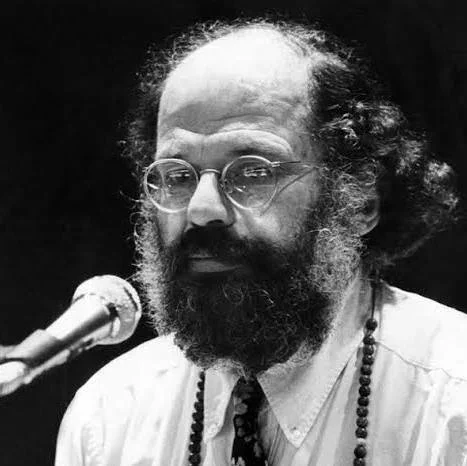
Having discovered John Cage, William Burroughs, Allen Ginsberg and the Beats, I felt that it was my role to promote them. Everything I have ever done has really been promotion of some kind. Running a bookshop involves a personal selection of stock. In my case I specialized in avant-garde literature and little literary magazines both at Better Books and at Indica.
In producing spoken word records, I naturally only recorded people I admired: Charles Olson, Michael McClure, Ferlinghetti, Ginsberg, etc. With International Times we promoted counter-cultural values and ideas. When I edited Time Out I emphasized the more experimental and creative events, the same applied to my journalism and finally to my books. My biographies are all of people whose work I wanted to promote: Ginsberg, Burroughs, McCartney, Zappa, etc.
Were there ways in which the pop world, its scale, its energy and its mass audiences was changing how the avant-garde figures you knew thought about their own work? Did anyone register what was happening commercially and respond to it in any way?
The Pink Floyd were all art school students, and the UFO era lineup of Soft Machine included Daevid Allen who took over Allen Ginsberg’s room at the Beat Hotel in Paris in 1958 and who participated in many of William Burroughs’ ‘invisibility’ performances and other Beat Hotel activity. Daevid was very much a connection to both worlds… Pete Townshend was a regular at the UFO Club and a big supporter of International Times. Another art student of course. He was taught by Gustav Metzger who introduced him to destruction in art. Soon Gustav was sitting in the front row of The Who concerts, rubbing his hands with glee as Pete smashed up his guitars.
As I’m sure you are aware, an enormous number of British musicians came from an art school background: The Clash, The Kinks, The Beatles, The Rolling Stones, David Bowie, Eric Clapton, Queen, Roxy Music, Led Zeppelin, in fact it’s hard to find a band where at least one member didn’t go to art school, if only briefly. They didn’t all enter music having been exposed to avant-garde ideas, but many did. That was the route.
Since you’ve written about the ‘Carnival of Light’ session itself in ‘Many Years from Now,’ I’m less interested in the recording’s particulars than in something adjacent: at the time it was made, did it feel anomalous to you (a one-off experiment) or did it feel like a natural next step, consistent with a direction McCartney had clearly been heading? In other words, was it surprising? Do you feel like it foreshadowed future involvement between the Beatles and the avant-garde?
Paul listened to quite a bit of John Cage at my place and also to avant-garde jazz. I was at his house once when he played the Ornette Coleman Double Quartet’s ‘Free Jazz’ to George Martin. It was done provocatively and George responded as Paul expected him to: ‘That’s not jazz, that’s not even music!’
This was a time when we all spent quite a bit of time sitting around stoned, banging on pots and pans, with a Revox A77 on full echo, and thought we were creating the most meaningful, deep, expressive music possible. I don’t think Paul saw it other than as an expansion of his musical vocabulary to include chance. This he used sparingly, such as the one long piano chord on ‘A Day in the Life’ that he said he took from Cage. But Paul’s head is too full of melodies for him ever to go in that direction. I must dig out ‘Carnival of Light’ and play it again as I haven’t heard it in decades and so I am often talking about something I barely remember.
Finally, is there anything about the relationship between the avant-garde and popular music in that period, something you observed firsthand, that you feel hasn’t been adequately captured in the historical record? Something the scholarship tends to miss, or get wrong?
A lot of scholars ignore the fact that almost all popular music from this period—particularly the more avant-garde end of it—was produced by people high on marijuana. It clearly influenced what they played and even how they heard it but you rarely see a reference to it. But back then, many musicians were connoisseurs of pot and could identify and discuss many different sorts of pot and hashish: Temple Buds, Leb Black, Moroccan Brown, etc, … A bit like wine buffs. The Beatles, The Rolling Stones, The Kinks, The Moody Blues would all have sounded different if they had been drinking instead of smoking.
I also think people sometimes overlook the fact that most records are the result of collaborative effort, but the publishing sometimes just went to the writer of the lyrics, ignoring the tremendous contribution made by a particular lick or solo that made the record commercial. Rock n’ roll has always been a very commercial art form, and even experimental musicians had high overheads: good guitars and amps cost money, and studio time has always been very expensive. Only recently has it been possible to produce very sophisticated results from a PC. It means that unlike other art forms, the performers have two personas. As Mick Jagger once told me, ‘People come to see a star, they don’t want to see the bloke next door up there on stage.’ And he’s right. Paul told me more or less the same thing. This must also determine the music’s accessibility and presentation.
In fact, the presentation has become an art form in itself. Taylor Swift’s recent Eras tour had the most remarkable stage set, whether you like her or not. Even in avant-garde circles, effort was made to frame the work or contextualize it with a light show, stage outfits or something to show that this was indeed a performance. Look at Pink Floyd or Brian Eno’s outrageous costumes with Roxy Music. I’m rambling, I’ll stop.
Barry Miles is the author of many books on rock music and counterculture, including “Many Years From Now” (with Paul McCartney), “Hippie” and “In the Sixties.” He lives in London.
Ava Weld is an undergraduate student from New England who has been writing casually about music for almost a decade. She is finishing her studies in the humanities and culture at Amsterdam University College this summer, and will be pursuing interdisciplinary Master’s study at the University of Maastricht in the fall. She has been a fan of the Beatles and rock music since she was 12.