

What Pacifism?
Where did all the peaceniks go?
It’s a question that never used to come up in a course on the post-World War II counterculture that I have taught for a decade at the University of Amsterdam, but like Reb Dylan sings: Things have changed. Or have we changed?
Issues of revolt and rebellion come up in every class on the 1960s, as they should, and thinking through questions of force and violence are always relevant, especially given the two—or is it three or four?—wars going on right now. So, pacifism comes up not only in relation to Vietnam, but in relation to the histories of civil rights and black power, feminism and gay rights, as well as national independence movements in Africa and the Middle East.
The students, who come from all over the world, hunger for both clarity and justice, which don’t usually go together. In the wake of Gaza, they had a chance recently to put their ideas into practice over the past two years, all but shutting down the school with their loud and angry protests on more than one occasion. What bothered me was not their non-non-violent tactics, blocking exits and entrances, and intimidating passers-by, using bullhorns to make our teaching and learning impossible—after all, these are my students.
I know them all, and they’re good people who are active about something terrible, and if they don’t get it right, they are after all still only teenagers. What really bothered me, and I suspect what frustrated them, what turned righteous outrage into something less admirable, was that they had found no effective and productive way to express that anger—in other words, to end a war.
But before we write off these young people as indulging in what Lenin in 1914 called adventurism—would-be revolutionaries with “no stable or serious principles, programme, tactics, organization, and no roots among the masses”—let’s remember the world they’ve inherited. If the revolutionaries of the 1930s were responding to a system that had failed in the form of the Great Depression, the revolutionaries of the 1960s were revolting against a system that worked, at least on its own terms, for many people. There were plenty of violent extremists back then, to be sure, but pacifism was considered at least a legitimate option. What has changed?
I am always on guard against what I call temporal exceptionalism, which claims that things are really different now. After all, there’s never been a time when people didn’t think things were different now, really different. Maybe this time they really are? After all, when drones prove to be more powerful weapons than nuclear bombs, when what’s really outrageous is not what’s illegal but what’s legal, as my old friend and mentor Wayne Barrett used to argue, haven’t things really changed?
This year, when I asked the class who considered themselves to be a pacifist, a single student raised her hand (and she was named, God bless her parents, after the Nigerian musician and activist Fela Kuti). It was a shock. So, I decided to try out some Jimi Hendrix on them.
“Machine Gun” is surely a definitive statement of the period when it comes to violence, but not because it has all the answers: Hendrix sings about the axe-wielding farmer even as he plays his own ax. The literary talents of Hendrix, who was a veteran of the Air Force, earning himself a dishonorable discharge for having been caught masturbating while on duty (you can see the documents regarding that “discharge” online!), are much underestimated:
Evil man make me kill ya
Evil man make you kill me
That kind of perspective spoke powerfully to the students, because it was so practical and pragmatic. It also spoke to their sense that wars are made by malevolent outside forces: imperialists, fascists, capitalists, take your choice. But war itself is no longer the problem for these students, as it was for everyone who had that famous poster from 1967 that warned us: “War is not healthy for children and other living things.” What changed?
I first noticed this trend more than a decade ago, when as part of a reading tour for my history of Harlem (A New York Times bestseller for one afternoon! I have the screen shot!) I gave a lecture at an uptown Manhattan middle school on Black radical traditions and was asked by one particularly brave and bright African-American girl: “What pacifism?” At first I thought she meant “which pacifism,” but then I realized that she meant “What is pacifism?” I think none of the students in the room knew what the white guy talking at them was talking about, but she was bright enough and brave enough to ask.
Grateful to have the opportunity for the first time to formulate my own definition of pacifism, I answered: “Pacifism is the principled decision not to use force against others, ever.” The girl took her time responding (I’ve often found as a teacher that not saying anything can be my secret weapon) and then asked: “You mean, if someone beat me, I don’t beat back?” “Exactly,” I answered. This time it didn’t take her long to respond: “I ain’t no victim, I ain’t no pacifist.”
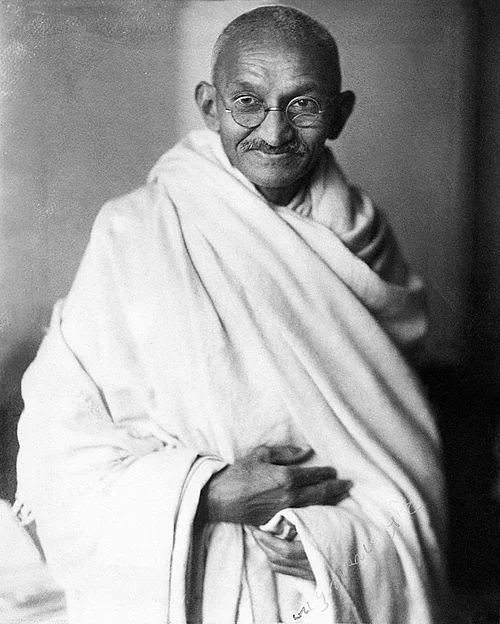
In order to understand the logic of such a position, one naturally turns to the classics, or at least I do, which may be part of the problem. Martin Luther King, Jr., Abraham Joshua Heschel, Bayard Rustin, John Lewis, David Dellinger, Daniel Berrigan, Thich Nhat Hanh, A.J. Muste, Reinhold Niebuhr, Norman Thomas, Gandhi, Tolstoy and Thoreau all came up with convincing arguments why force and violence are wrong, but all of them wrestled unsuccessfully with the failure of pacifism to attract truly widespread influence, and they all of them failed to establish voices who could carry their vision forward.
Why?
One answer is that the religious voices, Christian, Jewish and Buddhist—not many atheists in my pacifist canon, and no women, for that matter—who made such convincing cases for non-violence, have lost currency in the public mind. Impatience with transcendent metaphysical values, we now have an updated version of the romantic idealism of Nietzsche, or is it Kantian rationality? Either way, there’s a suspicion of liberal or progressive values that cannot answer questions of practicality except in theological terms. Our Enlightenment rationality can’t or won’t assert the validity of core moral codes. Our leaders instead have attitudes toward power that are nakedly mobilized for the uses of purely transactional tribal or nationalistic or personal interest. Whatever it takes to keep gas prices low.
Perhaps the boundaries have shifted. After all, when Germany is the only European country to stand up to Samidoun, an antisemitic Palestinian terrorist organization masquerading as an anti-war charity, and Japan is officially pacifist (though not for long, if the current prime minister has her way), it is clear that the moral calculus that inspired post-World War II pacifism has changed. And this is not only about politics. Black Lives Matter and #MeToo turned out to attract only temporary interest. Michael Jackson is more popular than ever, it seems, regardless of how many boys come forward with stories of sexual abuse, and the deranged singer Kanye West, whose intolerance is only slightly less deplorable for being blamed on mental illness, fills stadiums. Everything is politicized, it seems, but nothing is political.
This has taken on a most personal dimension for me. Intergenerational conflicts around the dinner table were a classic rite of passage for baby boomers and their parents. Bernardo Bertolucci’s 2003 film “Dreamers” sets the standard. A French university student and his friend, an American studying abroad, caught up in the thrill of May 1968, accuse the French student’s father, a left-wing poet with an incredible apartment in Paris and a wine collection to die for, of failing to oppose a system that oppresses workers in Europe and peasants in Vietnam. The father’s response, which resonates more and more with me, is that they are all part of that system. Change begins, he tells them, with that recognition.
Still, at our table in Amsterdam, things have taken an unexpected turn. My Dutch wife and I met in Israel in 1991, just before the Gulf War, and are confirmed Peace Now-niks, dedicated two-staters who can remember a time before Netanyahu and hope for a time after him as well. We are “swords into plowshares” types. But as liberal Zionists we are simply dinosaurs, not only irrelevant but extinct and living in a museum, in the eyes of our American-born but European-educated younger son, now in his twenties, who has never entered a synagogue, not in America, not in Europe, without passing through a security checkpoint. Of course, as he likes to remind us, that’s a very different sort of checkpoint than Palestinians endure on the West Bank.
My invocations of Gandhi and King, my insistence that we’ll get nowhere if we don’t attempt to understand the bad guys, if we don’t keep remembering how human it is to dominate and to hate, and how superhuman it is to keep talking and keep listening, fall on deaf ears. When the bombs are falling, the time for understanding is over, he believes. My own parents gave me an excellent education, but it went only so far. I had to discover the Tao te Ching on my own, and I made sure my children read it as soon as they could read. My copy is always close at hand, with a bookmark at verse 22, which counsels: The sage does not engage in disputes.
Ultimately, this comes down to a matter of practicality, our son believes: when something really, really bad is happening, and stopping it with something that’s merely really bad is the answer, there’s no need to keep talking and there’s certainly no need to keep listening. But I suspect that what really bothers him about my position is that it’s not a position at all, and that’s a form of privilege.
He’s right: I don’t have an answer or a solution, except to believe that the principled rejection of force is the only way forward, the most practical and pragmatic response of all. Are we still allowed to quote David Ben-Gurion in this context? Among his many sins he also at various times accepted the partition of Palestine into separate Jewish and Arab states and counselled a strict policy of self-defense, so he had it right when he wrote that anyone who does not believe in miracles is not a realist.
The Gaza protests at my university over the past two years were deeply disturbing, as was appropriate. After all, it was the death of so many innocents in Gaza, no matter what the justification, that was the real outrage, not the interruption of classes. What was truly disappointing to me was not the rhetoric or the disruption or the flagrant flouting of university rules, much less municipal laws, and even norms of civility, but the insistence on the part of the protesters that they suffer no consequences for their actions. This betrayed a horrendous lack of knowledge about the history of civil disobedience and ultimately about the responsibility that goes along with resisting power. You don’t hide behind a mask, but speak openly and publicly, not anonymously, but in your own name, and you bear the consequences. Surely they weren’t hoping for a presidential pardon, but we can’t blame them for thinking that way.
The baby boomers witnessed nonviolent resistance in real time, and every bookshelf in every dormitory room included dog-eared copies of Thoreau and Gandhi. But we are hard-pressed to name, much less endorse, current-day protesters willing to achieve “the conquest of the adversary by suffering in one’s own person,” as Gandhi put it. Then again, a few sentences in Gandhi’s massive oeuvre that can be interpreted as racist—against Africans—have undermined his authority.
Still, is not breaking the law in the name of the illegitimacy of those laws, and willingly accepting punishment, as opposed to demanding clemency that will allow these students to advance the careers that seem to be their first priority, the very essence of civil disobedience? We like to think that such activities brought the vote to women, achieved civil rights and gay liberation and ended the Vietnam War.
But it was more complicated than that, and if the protesters wearing keffiyehs on every campus in America and everywhere else don’t understand that, that’s also on us. This is especially true in Europe, where within living memory–but not for long–the violence of the Allies defeated the violence of the Fascists. Peace through war, Orwell called it, which is not something out of a fantasy novel after all: Japan only changed its constitution because its safety was guaranteed by a promise that the American military would come to the rescue if the country were ever threatened, which is why Japan refused to sign the 2017 Treaty on the Prohibition of Nuclear Weapons (so did the Netherlands). Those who resisted the Nazis nonviolently went up in smoke in Auschwitz, a fate that Gandhi, I’m troubled to say, failed to deplore: he actually thought Jews should have voluntarily and willingly presented themselves for destruction.
Satyagraha is a bitch, apparently.