

Many of those bemoaning the state of journalism today—perhaps you are among them—reached adulthood in the final decades of the 20th century, when the most respected news organizations still espoused the gospel of objectivity: Thou shalt not reveal thine own opinion!
And, indeed, that kind of just-the-facts, evenhanded, “on-the-one-hand-this, on-the-other-hand-that,” “objective,” supposedly opinion-free journalism—which, to be sure, had its virtues—has, in this new century, grown scarce.
It is sometimes even honored in the breach by survivors of that now bygone era, like The New York Times, which upon occasion fails to disguise its anger at Trump’s transgressions and failures.
Good, I say.
For the apparent “death of objective journalism” clears the way for the return of a much older kind of journalism: analytic, argumentative, sometimes speculative, occasionally foolish, but honest: a journalism that is not contorting itself to hide what it really thinks.
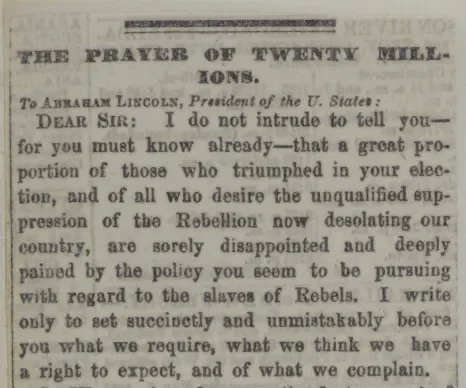
That journalism was Horace Greeley in an open letter to President Abraham Lincoln in Greeley’s New York Tribune in 1862, calling on the president to immediately free all the enslaved people in the confederate states: “Every hour of deference to Slavery is an hour of added and deepened peril to the Union.”
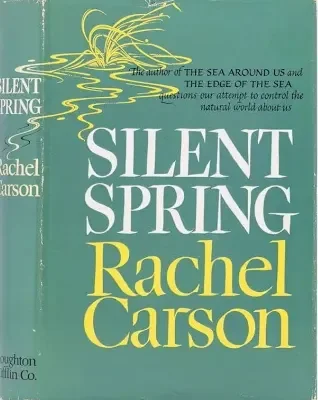
That journalism was Rachel Carson in the introduction to her attack on the use of pesticides, ”Silent Spring,” which first appeared in The New Yorkerin June of 1962:
The history of recent centuries has its black passages—the slaughter of the buffalo on the Western plains, the massacre of the shore birds by the market gunners, the near extermination of the egrets for their plumage. Now to these, and others like them, we are adding a new chapter—the killing of birds, mammals, fishes, and, indeed, every form of wildlife by chemical insecticides indiscriminately sprayed on the land.
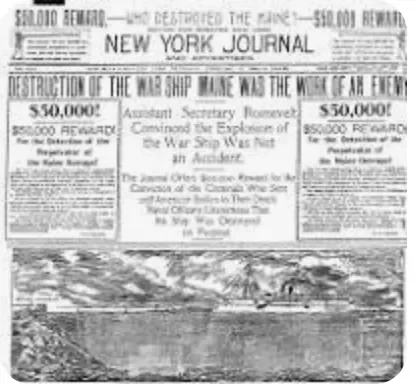
Yes, plenty of the opinions journalists have promulgated over the centuries have proven foolish, even mendacious, at times outrageous: William Randolph Hearst in his New York Journalhad used trumped-up atrocities to incite a war against Spain to free Cuba in 1898.
Henry Ford’s newspaper, The Dearborn Independent—which he insisted that his car dealers place on the seats of the automobiles they sold—published disgusting articles like: “The International Jew: The World’s Foremost Problem.”
New York City had nine English-language daily newspapers in 1940. And each of the city’s newspapers attempted to secure a niche on the political spectrum by trumpeting their degree of fealty toward or horror at President Franklin Roosevelt’s “New Deal.” They were selling news. But they were also selling opinions.
Television arrived after the Second World War, however, and many, even most newspapers would succumb, eventually, to the competition. Those that hung on mostly migrated to the center of the political spectrum so as not to alienate too many readers.
The opinions grew more tepid. The ideas, perhaps, did too.
Newspapers were joined in their new-found second-half-of-the-20th-century compulsion not to offend by the new TV newscasts, which were scrupulously avoiding the appearance of partisanship because of their own need for large audiences and their fear of government regulation.
That is why—as you likely know—it was itself big news when Walter Cronkite, anchor of the CBS Evening News, actually dared state the emperor’s-wearing-no-clothes fact that the Vietnam War was “mired in stalemate,” after his visit there in 1968.
However, as the 20th century was ending, the number of voices straining to be heard began to swell again—on television (as cable added dozens, then hundreds of channels), on radio and, of course, in the new century, with the cacophony that is the internet.
Now, as you definitely know, we have news seemingly from everyone, everywhere, all the time—yes, occasionally still in print, but finding its largest audiences on cable TV or the internet or on our phones.
And getting attention in the din seems to require if not a loud opinion at least an effort to say something a jaded audience has not often before heard.
The uncontroversial center seems more and more uncommercial. And, given the undeniably undemocratic, even unconstitutional behavior of the current occupant of whatever part of the White House he has not yet torn down, nonpartisanship seems a form of cravenness or stupidity. And much of what passes for news is, as it was when we had a multiplicity of newspapers, loud, angry and opinionated. Indeed, wander to the wrong corner of the internet or cable box and you’ll be hearing our Hearsts or Fords peddling dark conspiracy theories.
We have been in recent months—for reasons, in large part, of whim and wrongheadedness—intermittently at war with Iran. Good luck if you want to read or hear or watch a report on that war—on Fox News, on MS Now, on podcasts, on Substack—that does not take a position for or increasingly—since that damn war appeared not to make a whit of sense—against.
And everyone—on all of the above, plus Twitter, BlueSky, YouTube, TikTok, Instagram, Reddit, as well as, still, in The Atlantic and The New Yorker, and The New York Times—seems to be in the business of commenting on the news. Why, a choice and droll opinion is now likely, as you know, to appear in the monologue that opens a late-night talk show—unless Trump’s millionaire minions manage to shut them all down,
Making your way through the vast pool of available news today, is like being a newspaper reader in New York City in 1940, except there are even more, lots more, news outlets—and a cornucopia of perspectives.
Okay, you say. Tell me something I don’t know.
Here’s the point: Yes, it is true that opinions, especially if they happen to conflict with our opinions, can be really annoying. There is little less fun than being forced to sit through a rant we find wrongheaded and dumb. Nonetheless, a wide range of available points of view is certainly good for a society.
Sure, a majority of those opinions will be trite, hackneyed—humans, unfortunately, being only human. Sure, some—especially if you frequent the news outlets still pretzeling themselves in order to support America’s current leader—can be mendacious.
But some of those opinions are going to be wise. And there will often be a lot more to them than—as it too often was the case with stories in the Times or on CBS News in the second half of the 20th century—who, what, when, where and here is a quote from someone on each side.
Indeed, if you range widely enough nowadays, more often than not you’ll encounter the analysis of an expert, maybe even a scholar. Read, for example, Rajan Menon or Mohamad Bazzi on the Middle East; Anne Applebaum or Phillips O’Brien on Ukraine; Noah Smith on economics; Derek Thompson on matters cultural; or the scathing honesty of Tina Brown (remember her?) on society, culture and politics. With the exception of Bazzi, who writes for The Guardian, all of the above appear on Substack, which, unless it too succumbs to enshittification, seems a cornucopia of opinions and ideas.
More than 63,000 active newsletters can currently be found on Substack. That certainly does not mean 63,000 disparate, let alone wise, perspectives. But that does—if you wander a bit beyond your faves—offer the opportunity to bump into the occasional rogue, even mind-expanding idea.
So, sez I, let a thousand opinions bloom—even if you have to clomp through the weeds to find a couple of appealing ones. Let there be debate, even discord. Finding one challenging idea probably makes up for having to skim a bunch of predictable analyses.
And, yo, reader! It is probably time for us all to ease up on the someone-wrote-something-somewhere-that-was-wrong indignation. Maybe we require regular reminding that our job as a news audience is to do some wheat-chaff, intelligent-dumb separating.
For, in these perilous times, an incredible smorgasbord of news, analysis, opinion and ideas is now laid out before us. The odds are pretty good that somewhere in there—if the news remains able to flow freely—will be something that might change a mind, perhaps even your own mind, if not show the way to an actual route out of this mess.
This essay first appeared in Mitch Stephens’ Substack, Ideas on Ideas.