This post originally appeared on Mitchell Stephens’ Substack, Ideas on Ideas.
“The successful inventor,” the French historian Fernand Braudel concluded, “had to have society on his side.” Many inventors have found that society was not ready to do its part.
A few inventions succeed immediately … most don’t.
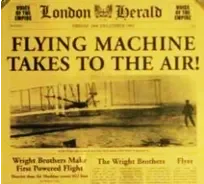
After Orville Wright first lifted off the ground in the “Flyer” in 1903, it took a while for the world to learn and accept the fact that it had really happened. But after Wilbur Wright's spectacular demonstrations in France in August 1908, the world proved enthusiastic. And it would also have been enthusiastic had Wilbur managed such a flight ten years earlier or later. Society had no trouble grasping the magic, if not the usefulness, of powered flight.
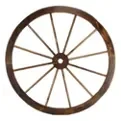
On the other hand, nobody was particularly dazzled when a Scottish engineer, Robert William Thomson, invented the much-less-inspiring pneumatic tire in 1845. These leather tires with an air-filled, rubber tube inside, made for a less jarring ride. But rubber was expensive and society was unimpressed. Iron-rimmed wooden wheels worked okay on horse-drawn carriages.
We may be wrong about a new technology not because we have misunderstood the technology but because we have misunderstood the society that will have to accommodate it.
It would be decades before inflated rubber tires—which were indeed a good idea—found their way onto bicycles...and the new automobiles.
Too early can be as bad as too late
Inventors race to be first—for good reason: School children don’t learn the names of those who flew after the Wright brothers. However, as Thomson learned, being first doesn’t always count for much when society lags behind.
And there have been other inventors who were more dramatically ahead of their time.
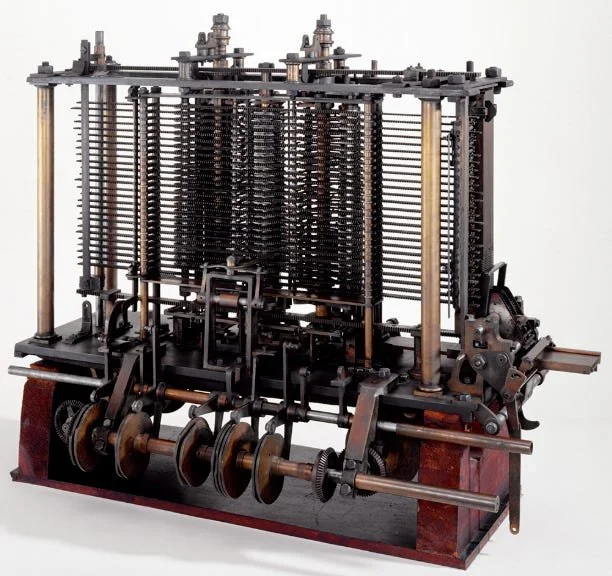
A completed section of Charles Babbage’s “Analytical Engine,” designed in 1837
At about the same time Thomson was inventing his pneumatic tire, another Englishman, Charles Babbage—a mathematician and engineer—was designing a machine that, had it been completed, would have anticipated the modern computer by a century.
Another extraordinarily farsighted person, Ada Lovelace, daughter of the poet Lord Byron, wrote what was not then called a “program" for Babbage’s analytical engine, which was not then called a “computer.”
Babbage and Lovelace had achieved dazzling conceptual breakthroughs. But they achieved them much too early—given the materials and technologies available at the time, given the levels of understanding at the time—for them to exploit their insights.

In a more recent, if less dramatic, example of being ahead of your time, IBM assembled most of the ingredients for a touchscreen smartphone in the early 1990s. However, IBM’s “Simon” not only was large and sluggish, it had no Web browser, there barely being, at the time, a Web. Only 50-thousand were sold.
The money usually does not go to the swiftest or most creative
Forty-three years after Thomson, another Scotsman, John Boyd Dunlop, also came up, apparently independently, with the pneumatic tire. By then bicycles, upon which bumps were felt with particular acuity, were establishing themselves as a popular form of transportation. They could benefit greatly from these softer tires—as could the new automobiles. The time was now right. Dunlop's reinvention of the air-filled tire helped create a hugely successful industry, though even he, as happens to many inventors, failed to get rich off of it.
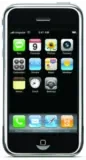
And in 2007 Apple launched its version of the touchscreen smartphone – one of the most successful products in history.
The iPhone was not a hugely original invention. But this time, invention and society proved to be perfectly in sync.