

Jeans Part II: Culture Changed, Stayed Changed
For “Jeans Part 1: Dressing Down” click here.
The way Americans dressed—and in due time the way the world dressed—started changing about two thirds of the way through the 20th century. And our generation was in the forefront of that revolution.
I was no rebel, and anything but a fashion leader, but I actually won a tiny little battle in this revolution. As a senior at my small suburban high school in 1967, I believe I was the first to challenge the dress code and wear dungarees to school. The assistant principal just smiled. There were thousands of such victories at thousands of high schools.
And that war has stayed won for a remarkably long time.
After some nudging I convinced ChatGPT 5.2 to draw images of typically dressed Americans from different decades. Here is its version of a typically dressed American male from the 1990s meeting a typically dressed American male from the 2020s:
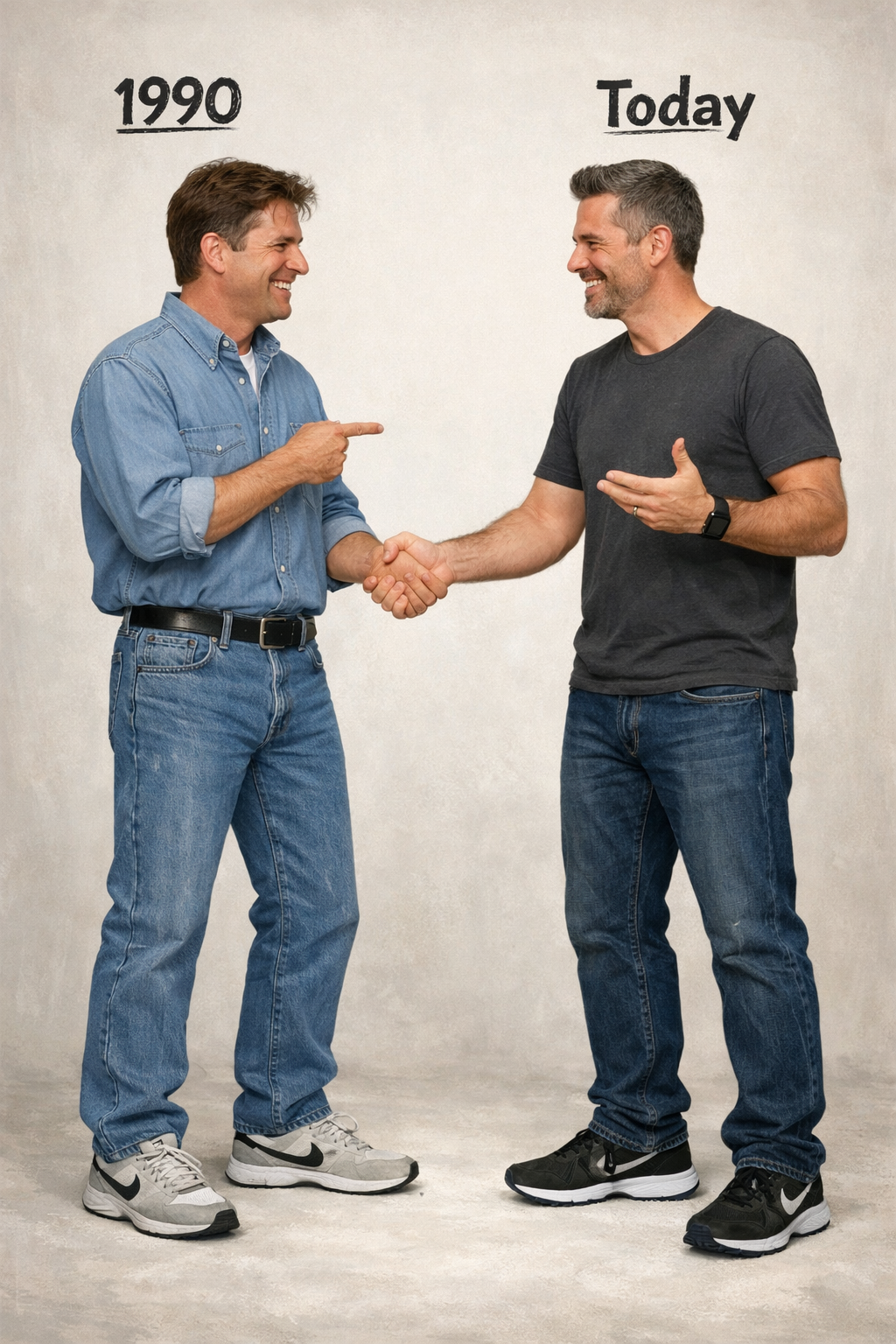
Thirty-five years, and not much more than an untucked shirt’s worth of difference between them?
Here is a woman from the previous century and one from the current century:
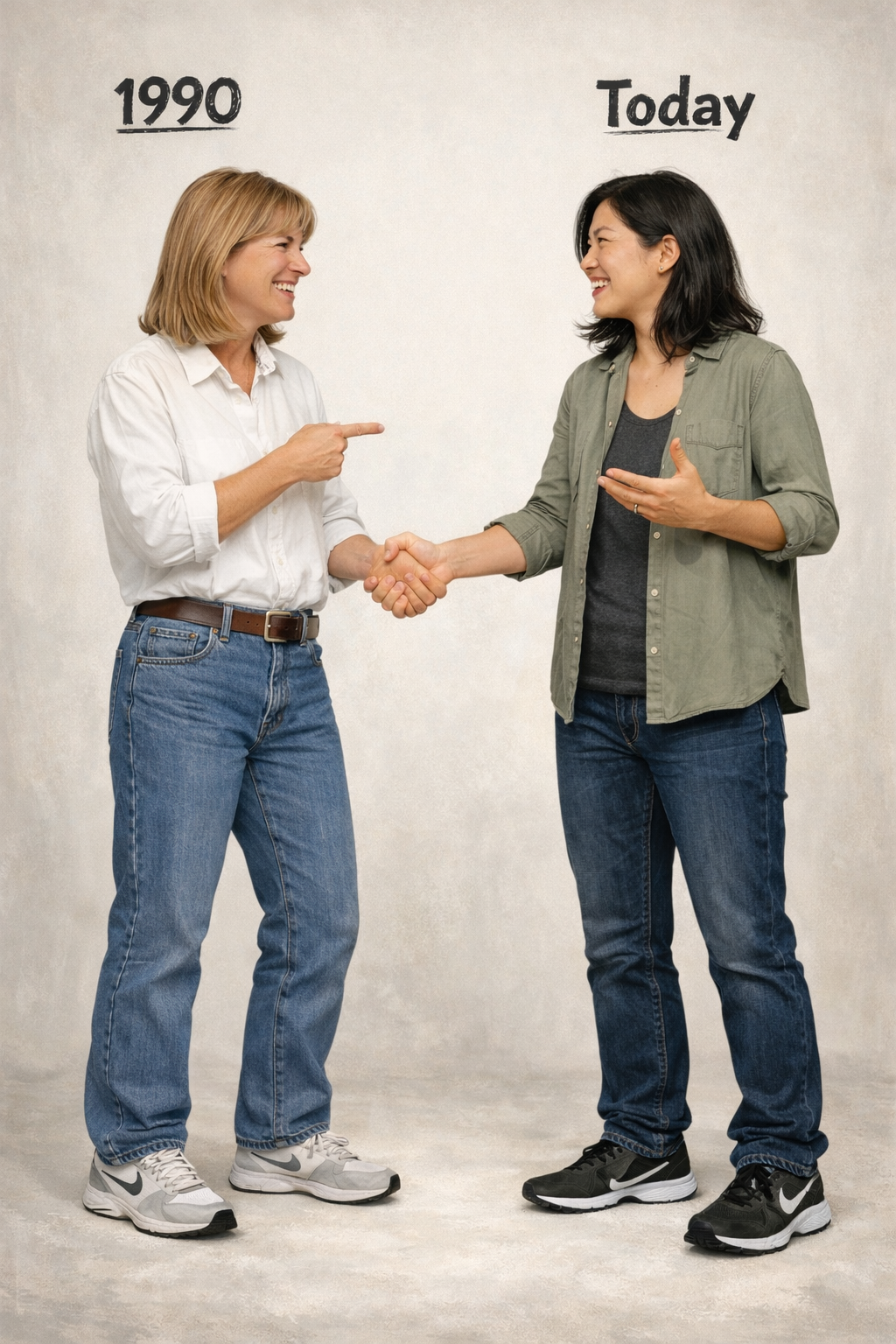
Same similarity. The jeans thing keeps on keeping on.
Is this fair? Has everyday fashion really stayed so stagnant for decades?
And am I right in thinking that there was an earlier period in our lifetimes when day-to-day wear actually did undergo some dramatic variations?
Here (switching AIs to Gemini 3) is a longer time period: the last five decades of the 20th century—left to right, 1950s, 1960s, 1970s, 1980s, 1990s:
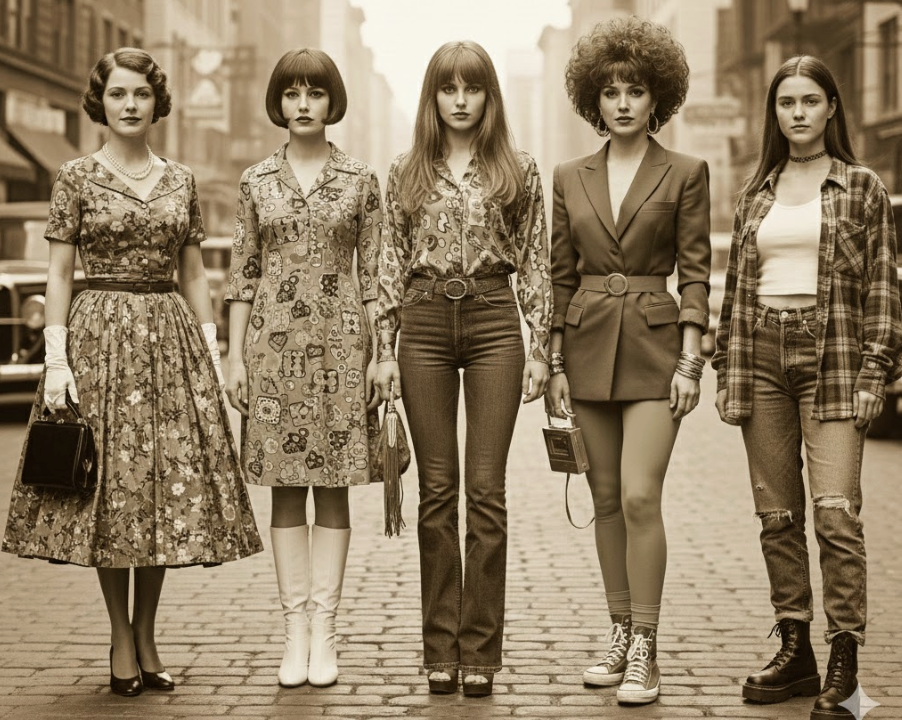
If you don’t worry too much about that 1980s woman in tights and accept this AI compilation of outfits worn by fashionable, young, normie white women—most of whom were, of course, still perfectly willing to rock a dress upon occasion—well, then it seems possible to say that dress had indeed ch-ch-changed by the seventies.
Now, here is Gemini’s depiction of one American young man for each decade of the second half of the 20th century (with, apparently, a guest appearance by Paul McCartney), again 1950s, 1960s, 1970s, 1980s, 1990s:
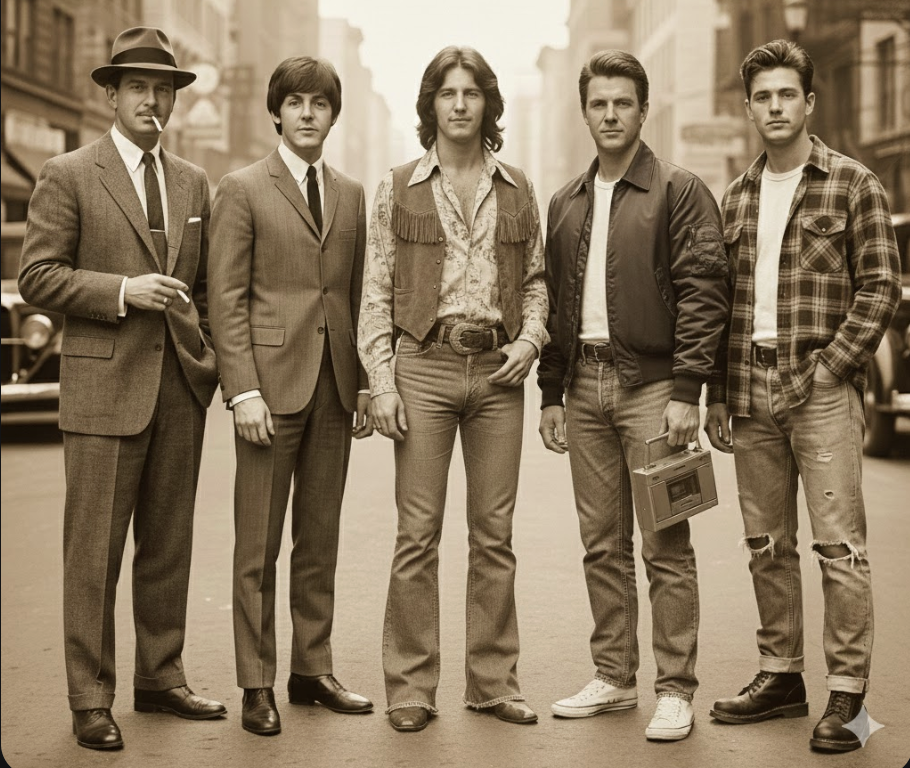
And there it is even more clearly. The ubiquitous blue jean.
And we and our generation were early and passionate adapters of the whole dungaree thing.
And this was one overturning of the old order—legalized marijuana, much later, was another—that once won seems to have stayed won.
And, if you remember our 2020s guy and gal in the images above it hasn’t stopped happening yet. (I’m switching back. here to ChatGPT.)
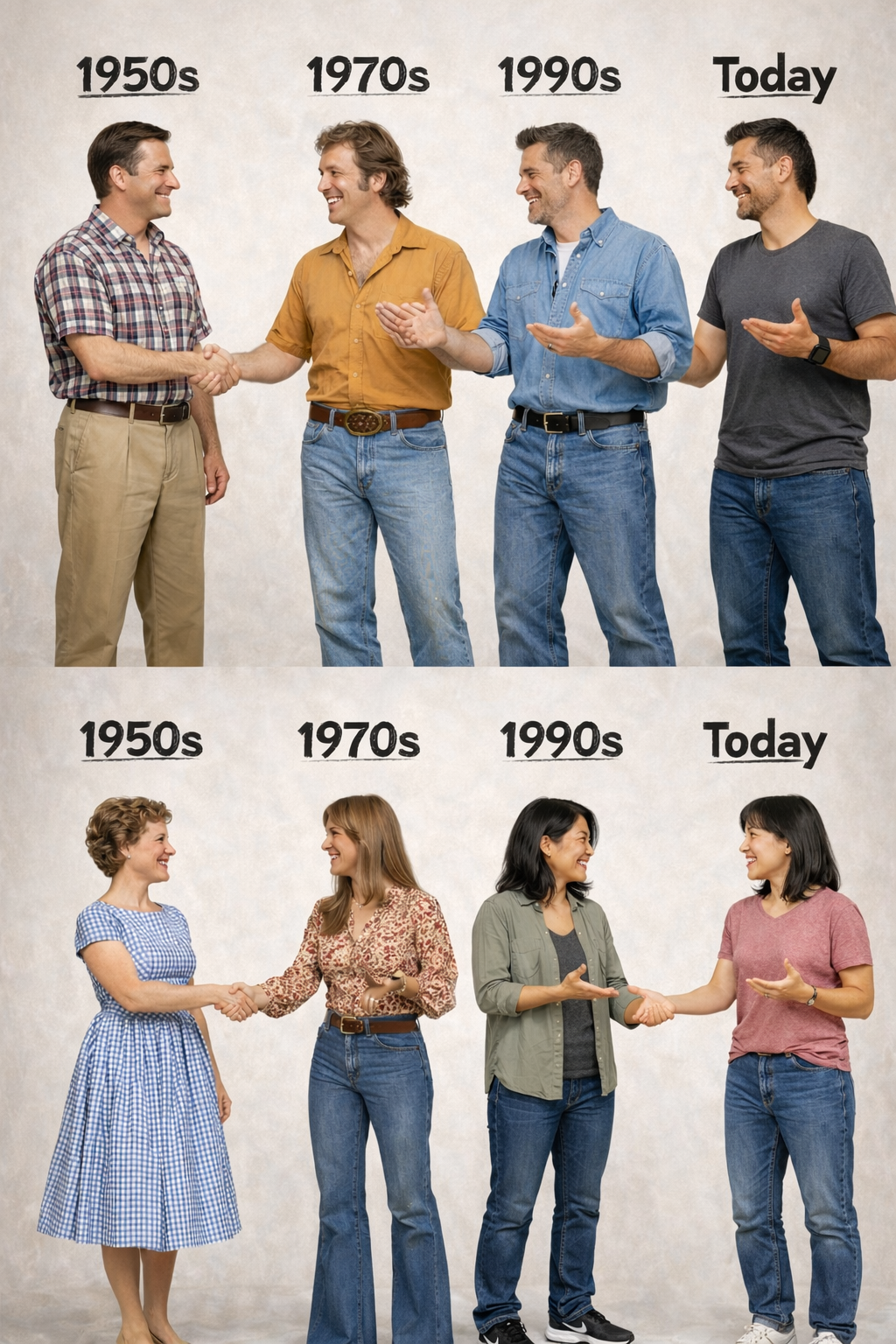
By modernity’s standards, the 55-years-and-counting reign of blue denim has been remarkable.
And, I would argue, it has been connected to a significant change in human nature: We—most of us—became less formal, more laid back, less pretentious, more concerned with comfort, and, perhaps, even a bit more relaxed.
We were and are the blue-jean generation. And, if we can forget politics for a moment (a big ask, alas), it kind of, sort of, has become a blue-jean world.
Our clothes express our informality. Our clothes have contributed to an increased informality.