


Israeli Academics denounce “the cynical use of 'combating antisemitism' as a pretext” by Trump Administration
The following statement (discussed in Haaretz on April 17) has been signed by more than 200 Israeli academics.
We, Israeli professors, educators, researchers, graduate students, and members of academia, hailing from diverse disciplines and backgrounds, possessing diverse political views, living in and outside Israel, are deeply concerned about the recent actions undertaken by the US Administration against Columbia University and other US universities. In particular, we are alarmed by the persecution of Palestinian and pro-Palestinian students and faculty, including the illegal arrests and threats to deport activists without any specific charges or due process, at times in clear violation of court orders, especially under the pretext of combating antisemitism.
As Israeli citizens and academics who have devoted our careers to teaching and research in the spirit of free inquiry and free exchange of diverse ideas, we consider these steps to be profoundly unjust, dangerous, and in violation of civil rights and principles of academic freedom. Such draconian moves do not protect us! . . .

“Neil, Can I count on you…?”
. . . I understand: they are sending off millions of emails, as easy as sending out one, hoping to just hear back from a few, hoping to raise any money they can for their campaigns.
In the past, I have given money to some progressive candidates and to some progressive organizations. I have supported some groups and have signed some petitions. I understand that my information is shared among office holders I have supported, candidates whom I have never heard of and organizations with similar political stances.
And I acknowledge that the inbox isn’t nearly as overflowing as it was those few weeks before the election when I think every progressive candidate running for every possible office was beseeching me to just donate whatever I could, even if it’s just five bucks.
But, please: stop. . . .

Going to Vienna…During the Reign of trump
After Donald Trump was elected, I purchased tickets to Vienna. I needed need to get out of America to understand how the rest of the world perceived us.
My husband and I flew out of Montreal, which is just an hour from our home. When we crossed the border into Canada, I could feel a cold chill come over me. I was sure it was an anti-American vibe. Why not? Trump threatened to annex Canada and now I would be an “Ugly American.”
Moving through security I whispered under my breath, “I hate Trump – he is an asshole.” They whispered back , “It is not your fault.”
When we got to our gate, I ran over to a souvenir shop and bought two Canadian stickers and stuck them on my leather bag . . .

Here’s to Closed Captioning!
It’s a British spy thriller and a key moment in episode 6 of season 1. We’re just about to find out who’s responsible for kidnapping the innocent student and all the violence that ensued.
But they’re all speaking with impenetrable Brit accents. Some are East Enders, Cockneys. Others are from the midlands, heavy Yorkshire brogues. Most important, we don’t hear nearly as well as we used to and the accents make it harder. So, how the hell are we supposed to understand what they are saying as they finally explain the TV series’ convoluted plot?
Not too much of a problem, actually. We read the closed captioning.
We began using closed captioning all the time six or seven years ago . . .
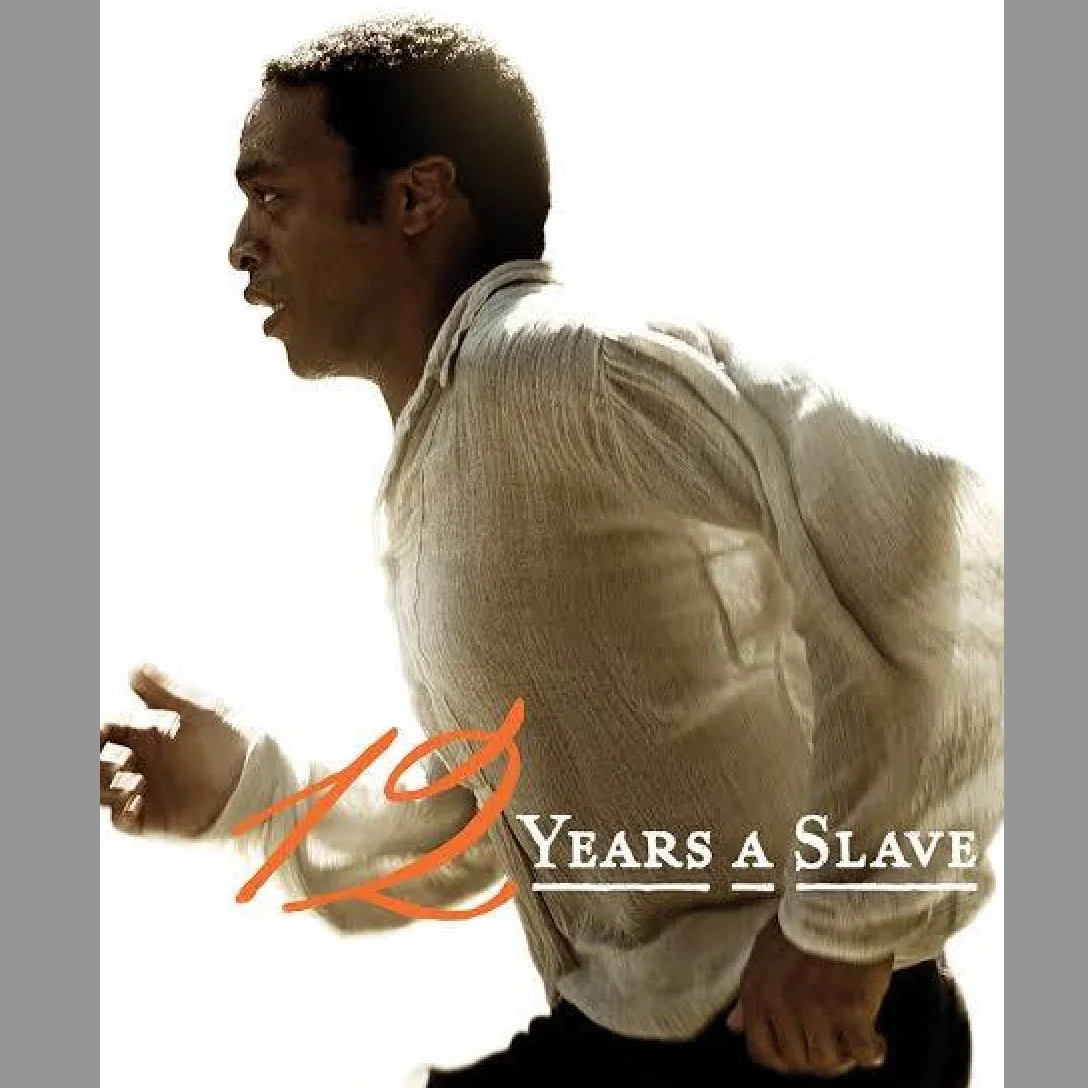
Favorite Films by Decade: the 2010s
My assignment: Choose a movie from each decade of my life that has had the most personal impact, starting with the 1940s and ending in the 2020s.
We’ve already covered the 1940s,‘50s,‘60s,‘70s, ‘80s, ‘90s and 2000s and continue now with the 2010s. These aren’t necessarily the “best” movies of the decade or the most innovative; they represent the films that resonated most with me, either from my initial viewing when they were released or when I first engaged with them in subsequent years.
Some rules to keep these lists doable: 1) Only one film each decade by a particular director; 2) only English-language movies, due mainly to gaps in my knowledge about foreign-language films except for Italian neo-realism, French New Wave and the works of Akira Kurosawa, and 3) no TV miniseries.
I’m sure I’ve missed some great movies that should be on these lists. Yet this still leaves hundreds, if not thousands, of movies to choose from.
Let the arguments continue.
The 2010s:
“12 Years a Slave” (2013)

History’s Worst Ideas
Donald Trump’s bizarre decisions to launch destructive, incoherent, trade-choking tariffs on the rest of the world—and then erratically retract some and launch others—has prompted us to think of other really, really large and terrible ideas.
Invading Russia—1
Napoleon’s idea was to punish Russians for failing to join in a blockade of Britain. So, confident of his military power, he invaded. But, faced with the Russians’ scorched earth policy and a bitter winter, Napoleon ended up losing nearly 400,000 soldiers and his cloak of invincibility. One hell of a destructive idea, even though it gave one Russian author material for one hell of a good novel.
Communism
Karl Marx, Friedrich Engels and the thousands and thousands of people who believed in their idea for a more equitable society meant well. But Communism, at least at that stage of human development, soon proved not to work at all well. . . .

Quick-cut j i t T e R Y video: A manifesto
I have been arguing for the artistic and intellectal potential of fast-cut video ever since I published the book, the rise of the image the fall of the word, at the beginning of this century. Here is an article I wrote in 2011 making one version of my case.
What I have tried to do now is put that argument itself into a video. This video, therefore, is intended not only to make the argument for the potential of this new art form but to serve as evidence of that potential (as was—for a then new art form—Chuck Berry’s record Rock & Roll Music).
This video is, consequently, a bit less condensed than most of my other videos: it runs about three-and-a-half minutes—a minute longer than Chuck Berry’s song. However, it is a whole lot shorter than that article, not to mention that book.
Click Here for Video
I should add that the video is not without its pretensions: Shakespeare’s Hamlet is, for example, much quoted.
I am curious whether you think the video succeeds in making and embodying the point.

Finding a life while cleaning out a closet
As I was cleaning out a closet recently, I came across two large plastic bins of old photos, letters and mementos from the 1980s. At some point in the past, I had conveniently sorted them into manila envelopes by year. Because it was snowing outside and my plans for the day had been canceled, I decided to dive in and look through it all.
I realized at the end of several hours of reading through letters, cards and journal entries and looking at photos that these bins contained an encapsulation of the whole decade of my 20s. I marveled at the fact that I had kept all this stuff for the last 40 years (and I am not a pack rat). But I realized that I had kept it all because I knew, at some point, if I lived long enough, I might not remember most of these people or their relationship to me.
And I desperately want to remember it all. . . .

Making America White (and Male) Again
. . . .Donald Trump and his ideological allies are working feverishly to eliminate at least 100 years of American history. This goes far beyond his relentless efforts to eliminate all DEI policies and funds. It’s at the heart of his effort to expunge language from federal documents and web sites. It is at the center of his effort to censor school and university curricula, libraries and national museums. It is even, arguably, a plausible explanation of the administration’s spreading and largely subterranean assault on fully documented immigrants, many of them students at some of the country’s leading colleges and universities.
So much else is going on, however, that the story has not gotten the sustained attention it deserves.
Take late last week. That’s when Defense Secretary Pete Hegseth ordered 381 books expunged from the shelves of the U.S. Naval Academy library. Wrote Robert P. Jones, the author of No. 46 on the list, “White Too Long: A Legacy of White Supremacy in American Christianity” . . .

What I’m Still Good At
. . . . I can’t touch my toes anymore and my ophthalmologist, at my annual appointment, each year tells me I need new lenses because 20/20 is now 20/60.
I used to be able to sleep until 10 or 11, now I’m lucky if I can make it to 7. I don’t drive as well (those cataracts, getting bigger each year, make those haloes from oncoming traffic at night even more annoying).
I don’t hear as well, nor do I breathe as well or remember as well as I used to
And so on and so on. It’s all a little depressing. To balance it out, I’ve started thinking about what I’m still good at—what, maybe, I’m even better at now. . . .
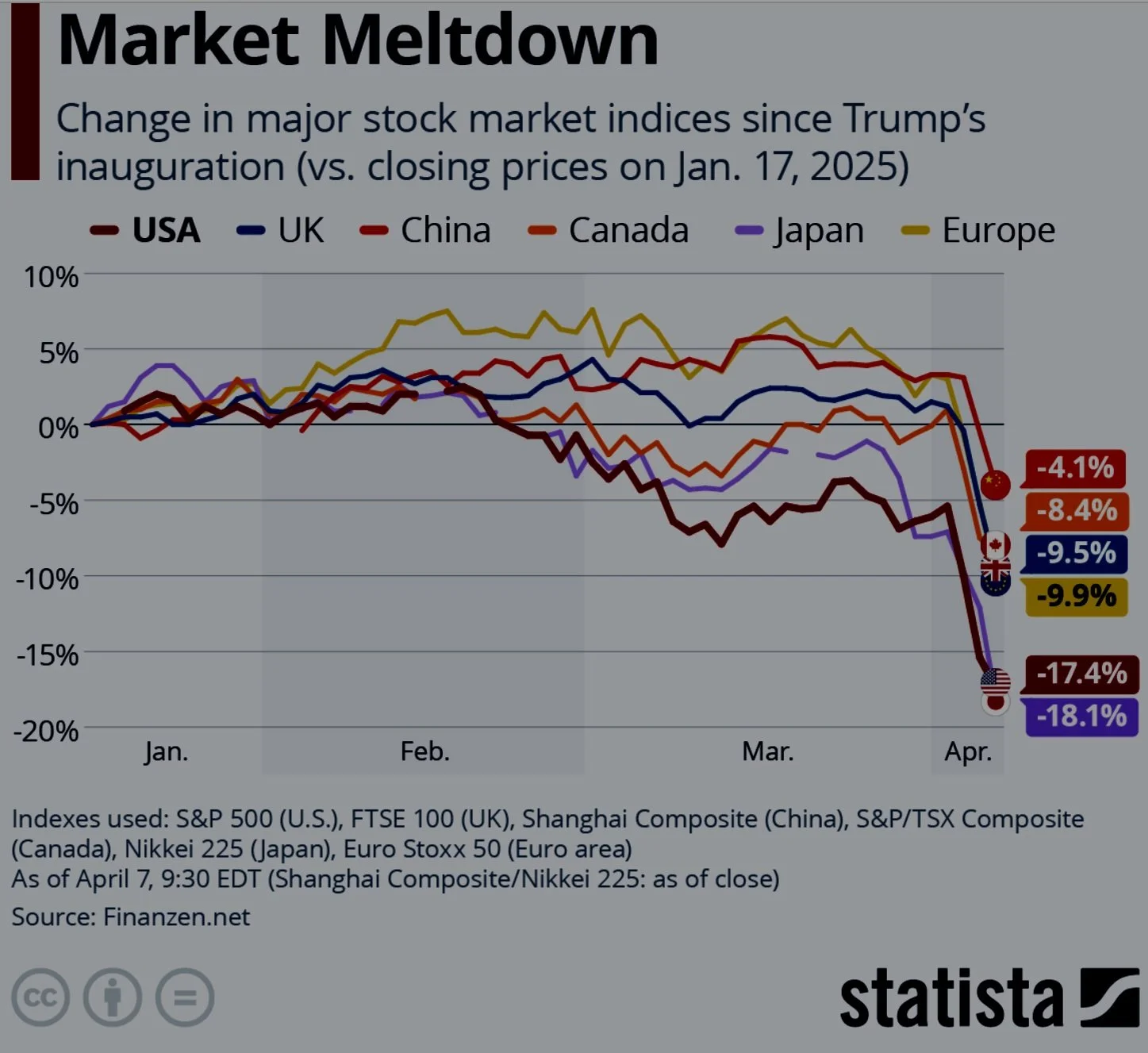
Thanks, Donald!
You have a habit—as you should know better than anyone, Donald—of always screwing up.
You have admitted to declaring bankruptcy four times. That was—telling the truth also not being a strongpoint of yours—a lie, of course. You have declared bankruptcy six times.
I know you like to pretend these bankruptcies were shrewd business strategy, but they were mostly, as most bankruptcies tend to be, just evidence of failed business strategies, of lots of screwing up. They also have demonstrated your usual willingness to rip people—your creditors in this case—off.
And between terms as president, you had sure spent an awful lot of time sitting in courtrooms—hearing about your lies, transgressions and even, though you pretend to be a ladies’ man, an allegation of rape.
The screw-up this past week, however, may be your grandest. . . .

Favorite Films by Decade: the 2000s
My assignment: Choose a movie from each decade of my life that has had the most personal impact, starting with the 1940s and ending in the 2020s.
We’ve already covered the 1940s, ‘50s, ‘60s, ‘70s, ‘80s and ‘90s and continue now with the 2000s. These aren’t necessarily the “best” movies of the decade or the most innovative; they represent the films that resonated most with me, either from my initial viewing when they were released or when I first engaged with them in subsequent years.
Some rules to keep these lists doable: 1) Only one film each decade by a particular director; 2) only English-language movies, due mainly to gaps in my knowledge about foreign-language films except for Italian neo-realism, French New Wave and the works of Akira Kurosawa, and 3) no TV miniseries.
I’m sure I’ve missed some great movies that should be on these lists. Yet this still leaves hundreds, if not thousands, of movies to choose from.
Let the arguments continue.
The 2000s:
“Dirty Pretty Things” (2002) . . .

The Russian Spring of Donald Trump
. . . The economy is tanking, we have started a destructive international trade war for no good reason but his own pique, our European allies no longer trust us, Ukraine is being left to be gobbled up by a Russian thug and autocrat, while our military strategy is all but being tweeted and YouTubed by an incompetent ex-drunk (supposedly) and serial abuser.
Meanwhile the very core of the federal government is being hollowed out by a throng of unelected crypto-Nazis whose hare-brained destruction of the federal safety net only will make life more of a misery for everyone, including the deluded MAGA base that elected him in the first place.
And leave us not forget the Gestapo-like roundup of immigrants and dissenters, the unconstitutional attacks on free speech and the press—or the worm-brained head of HHS whose idea of a sound policy to fight measles (one of the most contagious diseases ever) is to take huge doses of Vitamin A—and who thinks we’re better off fighting bird flu by letting it run rampant. . . .
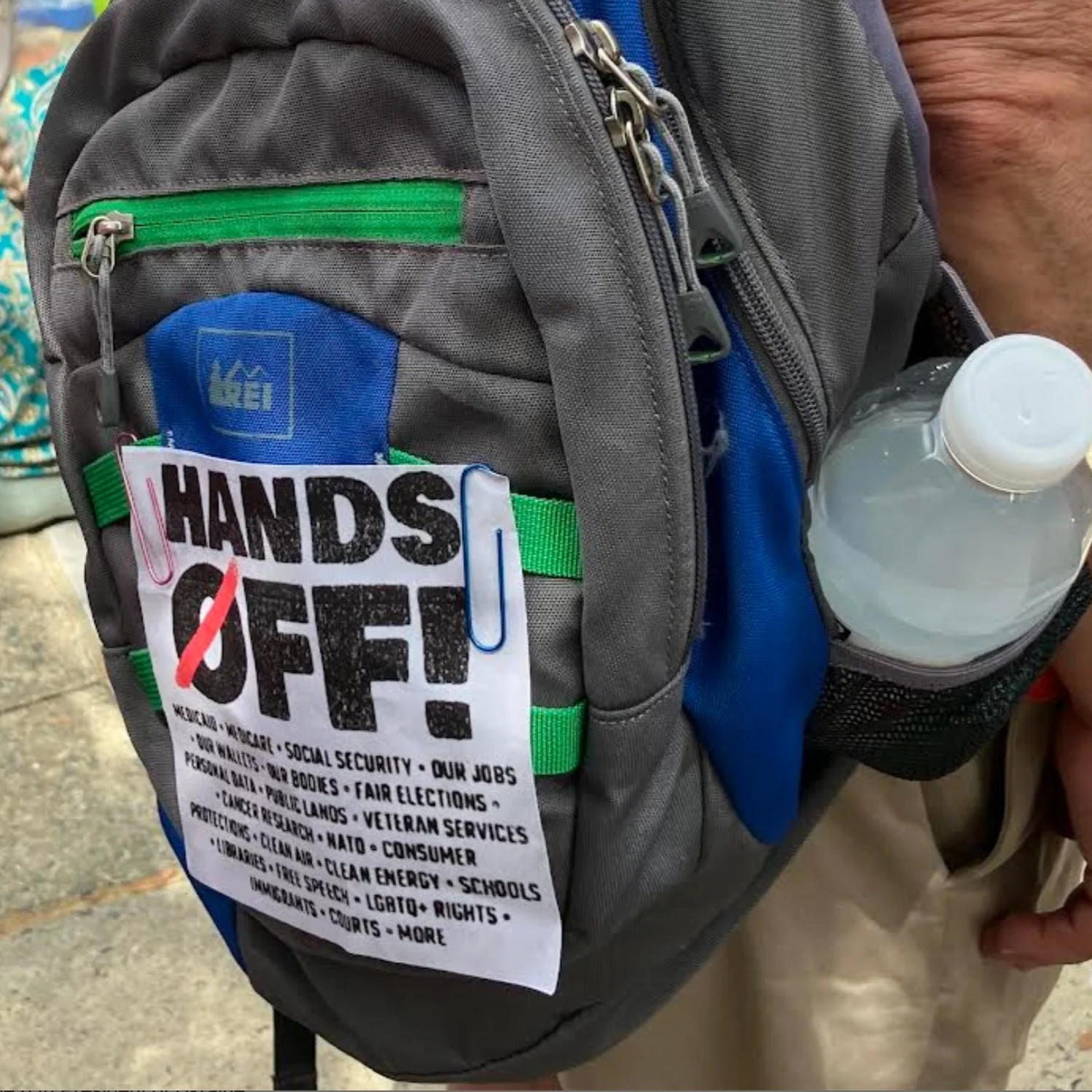
Scenes (and Signs) from a protest
In big cities and small towns, people—thousands, hundreds of thousands—gathered April 5 to say "Hands Off": hands off Medicare and Social Security and veterans' benefits and science research and women's rights and all the rest.
Will it stop the tsunami of dread? Of course not. But it's a start. And isn't that what we need now?
Click for more images

Tune Out The Ugly Noise
Amid the Trumpian apparatchiks’ dystopian cacophony of chaos and destruction, Pico Iyer’s “Aflame: Learning from Silence” (240 pages, Riverhead Books) offers valuable advice: tune out the ugly noise and focus on connecting more deeply with oneself and others to marshal righteous action.
The lessons in his memoir are drawn from notes taken over the course of his more than 100 silent retreats in a Benedictine monastery in Big Sur over the last three decades.
Iyer originally came to the center in 1991 after his home burned to the ground and he had no place to stay. He returned again and again: after his father’s death, his child’s cancer treatments and between international travel writing assignments. In this retreat he discovered that the solitude was “not so much about escape as redirection and recollection.” . . .

Confessions of a Former Optimist
I have spent much of my life being obnoxiously optimistic.
When friends have worked themselves into a state of doom and gloom about subway service in New York City on weekends because of construction, cheery Mitch can be counted upon to note that upgrading the signal system will increase the speed of the trains and shorten the wait between them.
Two and a half couples sitting around a dinner table could be bemoaning global inequality and I, as one half of one couple, will feel called upon to note that extreme poverty has been declining in the world in this century.
However—Thank you, President Trump!—I’m not feeling optimistic any more. . . .

A New American Leader Emerges
Cory Booker on Tuesday provided us with a moral moment, a ray of light in the wreckage of warrantless arrests and heartless, destructive firings escalating by the week in Donald Trump’s America.
The Democratic senator from New Jersey spoke — with force, coherence, dignity and humanity — for 25 hours and 4 minutes straight on the U.S. Senate floor, the longest one-man filibuster in the nation’s history. He never sat down. He never took a bathroom break. He spoke from 7 p.m. Monday until 8:04 p.m. Tuesday.
“These are not normal times in our nation, and they should not be treated as such in the United States Senate,” said Booker. . . .
This piece first appeared on Jerry Lanson’s Substack—where he regularly takes on the various Trump/Musk attacks on democracy.

I Wanted to Vote for Eldridge Cleaver
How could so many people have voted for Trump—not once, but twice? What were they trying to say, if anything? Or were they just saying a big fuck you to us all?
I think I may now understand that attitude because more than 50 years ago, during a national election, saying a big fuck you was exactly what I wanted to say.
My first vote in a presidential election was 1968: Nixon v. Humphrey.
Nixon, of course, unthinkable. But Hubert Humphrey’s support of the war in Vietnam made him unthinkable for me, too. . . .

Who Will Speak Out?
Of all the chaos roiling this country over the last two months, nothing has troubled me more than the arrest and imprisonment, without warrants or charges, of a growing number of documented foreign students.
Late last Thursday, Secretary of State Marco Rubio told NBC News that the Trump Administration had revoked 300 or more student visas. “We do it every day,” he said.
His comment came a day after a 30-year-old Turkish-born doctoral candidate at Tufts University, Rumeysa Ozturk, was plucked off a Somerville, Mass., street in daylight by a half-dozen masked federal agents. They grabbed her phone, handcuffed her, pushed her into an unmarked car and drove away. A neighbor filmed her abduction, footage that has ricocheted around the internet. Less well known is that she suffered an asthma attack as she was flown to a holding facility in Louisiana or that her lawyer had no idea where to find her for 24 hours. She is still being held. . . .

Favorite Films by Decade: the 1990s
My assignment: Choose a movie from each decade of my life that has had the most personal impact, starting with the 1940s and ending in the 2020s.
We’ve already covered the 1940s, ‘50s, ‘60s, ‘70s and ‘80s, and continue now with the 1990s. These aren’t necessarily the “best” movies of the decade or the most innovative; they represent the films that resonated most with me, either from my initial viewing when they were released or when I first engaged with them in subsequent years.
Some rules to keep these lists doable: 1) Only one film each decade by a particular director; 2) only English-language movies, due mainly to gaps in my knowledge about foreign-language films except for Italian neo-realism, French New Wave and the works of Akira Kurosawa, and 3) no TV miniseries.
I’m sure I’ve missed some great movies that should be on these lists. Yet this still leaves hundreds, if not thousands, of movies to choose from.
Let the arguments continue.